Applications are now open for Fall of 2026. RSVP for our Open House on March 28th to find out how the Academy uses boy brain science and virtue development to set boys up for success in life.
Understand why conflict resolution matters for kids and teens
Learn 15 core conflict resolution skills to implement and master
Explore how a military school incorporates conflict resolution
Understanding Conflict in Adolescence
Are you trying to learn more about teens and conflict resolution or trying to help kids learn specific conflict resolution skills? Whether you are a parent, teacher or a student, you can learn conflict resolution skills to ease pressure, help you navigate difficult social situations, develop your own voice and identity, and deal with disagreements. This is all part of developing emotional intelligence.
When conflict resolution skills are cultivated during childhood and adolescence, these strategies carry forward into college and beyond. This is why so many parents are choosing boarding schools because the right learning environment can play such a critical role in mental health, emotional regulation, and the ability to adapt.
Let’s face it; some schools address teens and conflict resolution far more directly and effectively than others. Check out school options, including: U.S. military boarding schools, prep schools, and charter schools.
Why Conflict Resolution Skills Matter for Teens
By learning the right tools to address conflict resolution for teens, we can reduce stress and improve communications at school and home. Mastering these conflict resolution skills and strategies can result in the following:
Stronger Relationships: Friends, family and teachers will appreciate the deeper connections that create respect and build trust.
Improved Mental Health: During stressful interactions, using conflict resolution skills will reduce anxiety and help regulate emotions.
College and Life Readiness: Conflict resolution skills equip teens with leadership skills and essential “soft skills” (e.g. communication, adaptability and teamwork).
Core Conflict Resolution Skills
To resolve disputes and conflicts effectively, whether you are a child, teenager or adult, it is essential to focus on these foundational conflict resolution strategies:
Active Listening: If you really concentrate on hearing the other person’s perspective before formulating a response, it will allow you to pause before responding. Conflict resolution training for kids and teenagers requires a focus on response vs. reaction by using reflective listening (e.g., “What I hear you saying is….”)
Empathy and Compassion: If you seek to understand the feelings behind the argument, it will lead to greater empathy and compassion. Try to ask questions about what the person is feeling rather than making assumptions about what is upsetting to them.
Personal Statements: Conflict resolution training is not complete without an emphasis on using “I” vs. “you”statements. It takes the blame and accusatory tone away from the conversation, so try to express your feelings with personal statements. (e.g., “I feel frustrated”).
Compromise and Consensus: By listening and responding, work towards finding a middle ground. This should result in both parties feeling like they have been heard and valued (e.g., “can we both agree to….”).
Navigating Relationships: Peers, Parents, and Teachers
Conflict resolution for kids and teens looks quite different depending on the setting and situation, so it is important to identify appropriate responses. For instance:
School: Addressing a teacher or administrator at school requires more restraint to avoid negative outcomes. Conflict resolution training involves helping others to listen carefully, pause, and then determine the best response.
Peers: Dealing with peers can be tricky as a child or teen, but it is important for kids to learn how to express themselves. They should avoid shaming or blaming others or calling peers out publicly. Preferably, they should speak with the individual in private.
Family: There’s no doubt that teen parent conflict resolution is a key issue in today’s families, but it is also true in childhood. Parents often want to provide advice and guidance and unintentionally intervene. While children may need adult intervention, teens typically want and need the autonomy and sense of personal agency to apply these skills independently.
Building Lifelong Skills at Army & Navy Academy
At Army and Navy Academy, we integrate conflict resolution lessons into daily life on campus and parents often cite conflicts at home also subside.. By providing a structured boarding school environment with clear expectations outlined in our cadet guidebook, students practice skills and strategies to manage disagreements.
Conflict Resolution in Action Across Campus
Not all conflict is alike, so it is important to consider the context and individuals involved to navigate strategically and thoughtfully, whether a student attends as a day or boarding school student.
Academics: Beyond a standard college prep curriculum, the Academy utilizes a West Point-style leadership framework, where academics and leadership are intertwined to develop good character and leadership. In the classroom, students work in teams, debate, and learn to address cultural, political and social differences.
Support Systems: Peer tutoring, counseling staff and teachers working after-hours provide support and individualized attention. This creates a personalized academic approach when students struggle with difficult material. They can also see counselors about social-emotional issues.
Leadership Development Programs: The Academy offers stellar leadership and virtue development programs that teach cadets how to communicate. In JROTC classes and during weekly virtue development chapel talks, cadets learn about values, ethics, how to build consensus, and adapt to group dynamics.
Athletics: Competitive athleticsare used to develop team-building skills, respect and cooperation. Conflict on the field is addressed through a focus on shared team goals. The “brotherhood” mentality, where teammates hold each other accountable and resolve issues together results in camaraderie and feelings of success.
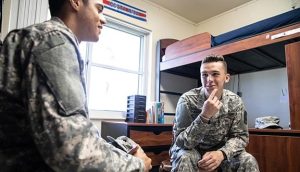
Dorm and Residential Life: The Academy provides a Peer Counseling Program specifically designed for the boarding school environment. Cadets are trained by professional residential life staff to learn how to listen and employ conflict-resolution skills. For instance, they learn how to navigate residential lifedisagreements or personal issues with teachers, staff, students or their friends.
Clubs & Extracurriculars: Student-led organizations, such as the Anti-Bullying Club and Associated Student Body (school government) allow cadets to take an active leadership role in creating a positive campus culture. These clubs and programs provide an outlet for students to share experiences and practice the core ANA values of honor, integrity, respect, responsibility, compassion and gratitude.
Seeking a School Built for Boys? At Army and Navy Academy, we specialize in transforming potential into confidence through structure, leadership, and brotherhood. We help teenage boys learn how to get along, not only with their peers, but also with adults. Schedule a visit to see us in action.
Army and Navy Academy is located on a scenic beachfront campus in Carlsbad, California, and offers a rigorous college-preparatory experience for boys in grades 7–12. As a top-ranked boarding school for boys and a Gurian Center for Excellence, the Academy provides
Structured Daily Schedule
Rigorous College Prep Classes
Mandatory Study Time and Support
Strong Counseling Support
Stellar West Point-Style Leadership training
Championship Level Athletics Program
Mentorship and Guidance 24/7
Admission Office at 888.762.2338 or directly at 760.729.2385